3-3-3 Rule for New Kittens: Days, Weeks & Months
What is the 3 3 3 rule for new kittens?
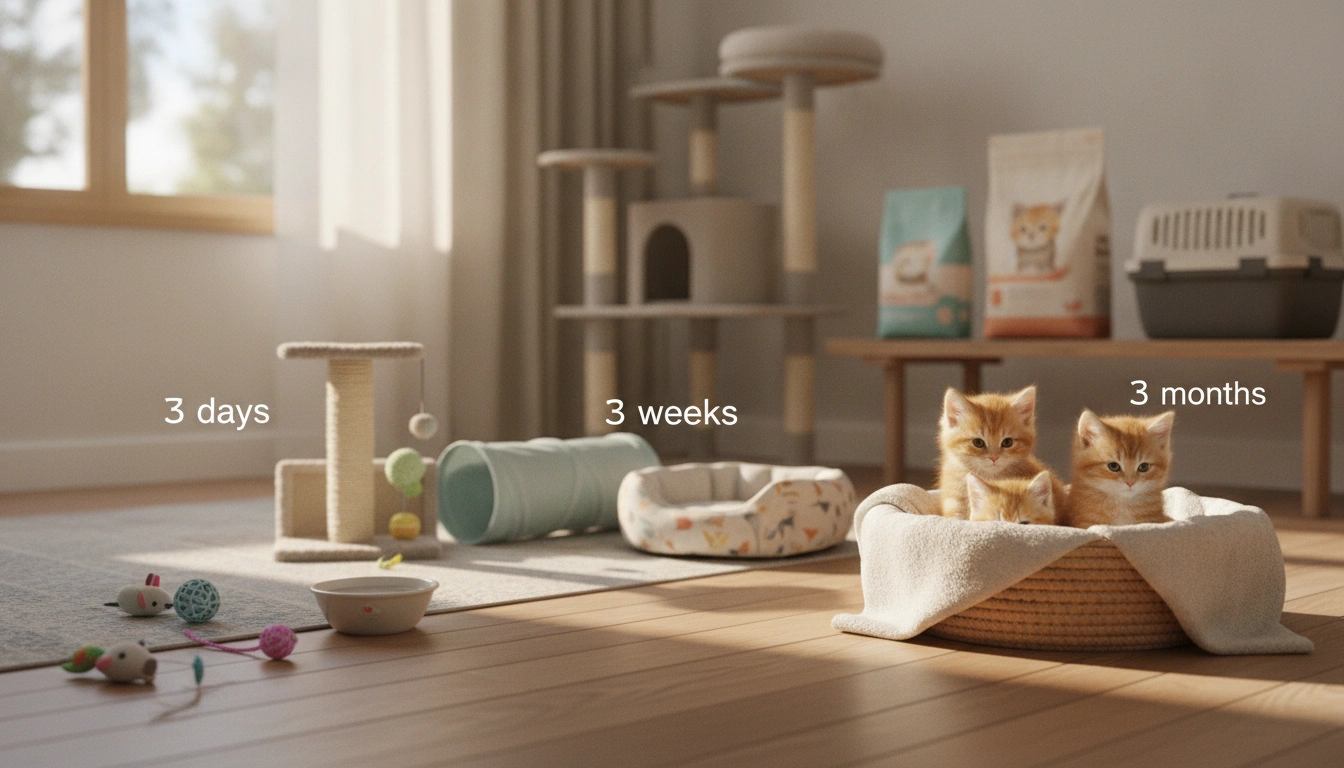
The 3-3-3 rule is a simple timeline that describes how many kittens tend to adjust after moving into a new home: the first 3 days are for decompression, the next 3 weeks are for settling into routines, and the next 3 months are for feeling truly at home. Every kitten is different, but this guideline helps set realistic expectations—especially if your new pet seems shy, cautious, or extra clingy at first.
First 3 days: decompress and feel safe
In the first few days, many kittens hide, sleep more than usual, eat less, or act skittish around hands, loud sounds, and unfamiliar smells. Keep life predictable: offer a small “home base” room with a litter box, food and water, a cozy bed, and a hiding spot. Speak softly, move slowly, and let the kitten approach you rather than forcing handling.
Next 3 weeks: learn the household routine
As your kitten starts to relax, curiosity and play typically increase. This is a great time to establish consistent meal times, litter habits, and gentle handling. Short daily play sessions (with wand toys or soft balls) help burn energy and build confidence. If there are other pets, do gradual introductions: scent swapping, brief supervised meetings, and plenty of escape routes.
Next 3 months: build confidence and bonding
By the three-month mark, many kittens show their full personality and feel comfortable exploring the home, seeking attention, and responding to routines. Continue socialization—touch paws, ears, and mouth briefly (with treats) to make grooming and vet visits easier later. Keep enriching the environment with scratching surfaces, vertical perches, and interactive play to prevent boredom and unwanted behaviors.
For a deeper breakdown of what to expect and how to support a smooth transition, visit the full guide on the 3-3-3 rule for new kittens.
FAQ
How long should a new kitten stay in one room?
Most kittens do best with 2–7 days in a quiet starter room, then gradual access to more space once they’re eating well, using the litter box reliably, and approaching you confidently.












Leave a comment